How Counseling in Schools Is Transforming Student Mental Health with Kevin Dahill-Fuchel, LCSW
Integrating Clinical Services Into Educational Systems with Kevin Dahill-Fuchel, LCSW
In this compelling episode I sit down with Kevin Dahill-Fuchel, LCSW, Executive Director of Counseling in Schools, to explore what it truly means to integrate clinical mental health services directly into educational systems.
This conversation highlights a scalable, trauma-informed, culturally responsive model that addresses one of today’s most urgent needs: accessible mental health care for children and families inside schools.
🫐Sponsored by Berries: Use code TherapyShow50 for $50 off your first month - CLICK HERE.🫐
Why Integrating Clinical Services Into Schools Is Essential
Schools are often the first place where emotional and behavioral challenges become visible. Yet traditional school systems are not structured to provide intensive clinical intervention.
Kevin explains that integrating licensed therapists into schools helps:
-
Remove insurance and access barriers
-
Reduce stigma around mental health
-
Provide immediate crisis response
-
Support families without requiring outside referrals
-
Strengthen school-wide emotional culture
Rather than functioning as outside providers, clinicians become embedded members of the school community.
The Counseling in Schools Model: Three Core Pillars
Counseling in Schools operates on a comprehensive framework that includes direct clinical services, enrichment programming, and professional development.
1. School-Based Clinical Counseling
Licensed therapists provide:
-
Individual counseling
-
Small group therapy
-
Family collaboration
-
Strength-based assessments (such as the Strengths and Difficulties Questionnaire)
Unlike traditional clinics, services are grant-funded, eliminating insurance navigation for families.
2. After-School Mental Health Integration
Clinical support extends beyond the classroom through:
-
Therapist-supported enrichment programs
-
Social-emotional learning activities
-
Cooperative art and creative projects
-
Behavioral support during extracurricular programming
This prevents students with emotional challenges from being excluded from after-school opportunities.
3. Professional Development for Educators
Schools receive training in:
-
Trauma-informed practices
-
Neurodivergence awareness
-
Group dynamics
-
Culturally responsive communication
-
Family engagement strategies
This systemic approach ensures mental health is woven into the educational environment, not isolated as a separate service.
This 1.5-hour NBCC-approved course gives you a structured, practical framework to confidently assess, conceptualize, and support clients experiencing estrangement without oversimplifying or pathologizing the experience.
If you’re working with clients who are estranged from parents, adult children, siblings, or extended family or you want to feel more grounded when these cases arise, this episode will give you clarity. And the full training will give you the framework. You can access the course and earn 1.5 contact hours here.
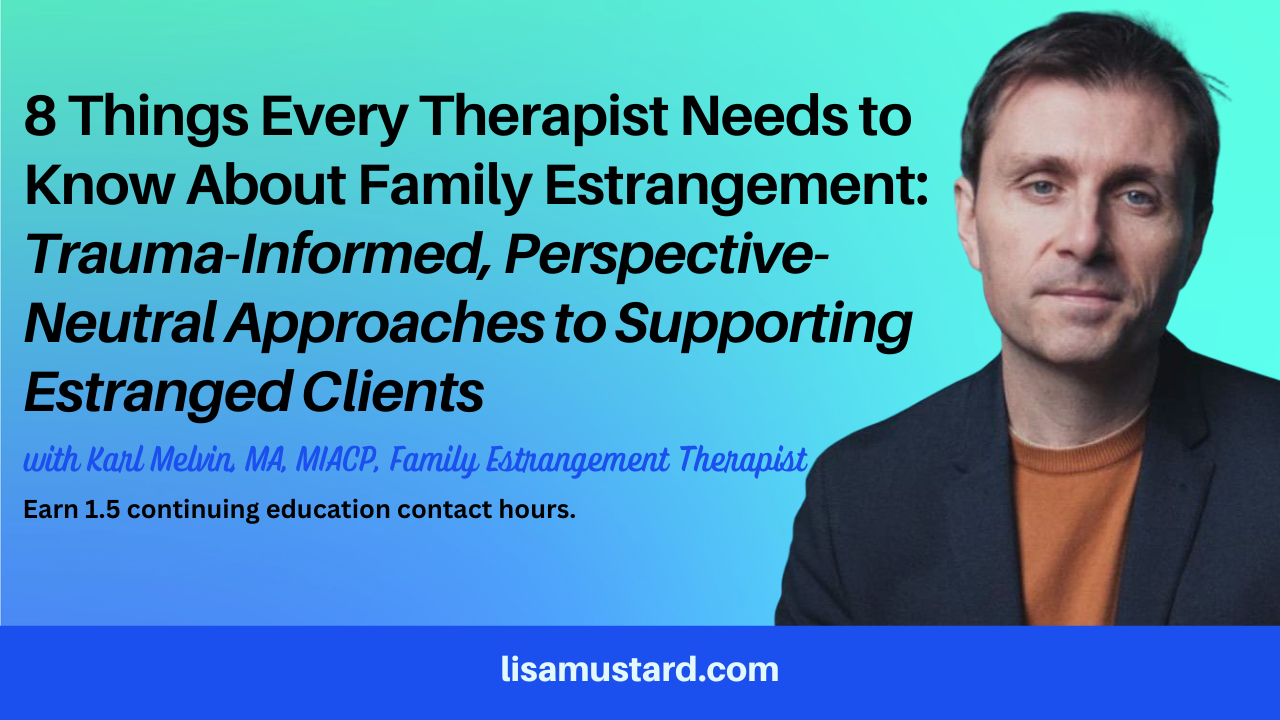 New Continuing Education Course: 8 Things Every Therapist Should Know About Family Estrangement with Karl Melvin
How This Model Differs from Traditional School Counseling
School guidance counselors often manage hundreds of students while focusing primarily on academic progression.
Embedded clinical social workers:
-
Provide deeper therapeutic intervention
-
Facilitate structured group therapy
-
Conduct comprehensive emotional assessments
-
Coordinate with outside medical-model clinics when needed
-
Offer crisis stabilization during community trauma
The result is collaboration—not competition—between educational and clinical roles.
Post-Pandemic Mental Health: What Has Changed?
One of the most powerful parts of the episode addresses how COVID reshaped student and adult emotional stability.
The Shrinking “Trauma Gap”
Before the pandemic, many adults in school systems had a stable emotional baseline compared to students experiencing chronic stress.
Post-pandemic, adults themselves are experiencing:
-
Heightened anxiety
-
Burnout
-
Emotional fatigue
Children, especially younger ones, are highly attuned to adult emotional states. Subtle insecurity in adults can increase anxiety in students.
Addressing Rising Social Anxiety in Students
Schools are seeing increased:
-
Social withdrawal
-
Conflict avoidance
-
Difficulty negotiating peer relationships
-
Overdependence on digital communication
Interventions include:
-
Play therapy for younger children
-
Puppet and storytelling techniques
-
Creative arts therapy
-
Structured social skills curricula
-
Small peer-based therapeutic groups
-
Limiting internet-enabled devices during school hours
Social skills are reframed as learnable, practice-based abilities rather than fixed traits.
Supporting Immigrant and Culturally Diverse Communities
New York City experienced a significant influx of asylum-seeking families, requiring rapid adaptation in schools.
Counseling in Schools implemented culturally specific interventions to address:
-
Assimilation stress
-
Language barriers
-
Identity conflicts
-
Migration-related trauma
-
Parent-child communication gaps
Culturally responsive frameworks help families preserve values while navigating new educational systems.
Crisis Response and Community Deployment
Over the years, the organization has responded to:
-
Public health emergencies
-
Natural disasters
-
Community trauma events
-
Large-scale student migration
Because therapists are embedded in schools, they can mobilize quickly, stabilize environments, and return to long-term support once immediate crises subside.
The Future of Clinical-Educational Integration
Kevin emphasizes that integrating clinical services into educational systems is not a luxury, it’s a necessity.
When mental health support is embedded directly into schools:
-
Academic performance improves
-
Behavioral issues decrease
-
Family engagement increases
-
Crisis response becomes immediate
-
School climate strengthens
This model represents a shift from reactive intervention to proactive emotional infrastructure.
Key Takeaways for School Leaders and Clinicians
-
Embedded clinicians enhance, not replace, school counselors.
-
Grant-funded services eliminate access barriers.
-
Post-pandemic anxiety requires systemic solutions.
-
Social skills must be intentionally rebuilt.
-
Cultural responsiveness is critical for diverse school populations.
-
Professional development strengthens adult stability, which benefits students.
Final Thoughts
This episode s more than insight; it presents a blueprint for systemic change.
By integrating clinical expertise into educational systems, we move from patchwork mental health responses to sustainable emotional ecosystems within schools.
As student needs continue to evolve, collaboration between clinicians and educators will be the cornerstone of resilient, thriving school communities.
Other Resources:
Need CE contact hours? Explore my NBCC-Approved Podcourses & CE Courses
Get my Coping with Political Stress Workbook that's Canva Editable For Clinicians, Coaches & Educators
Therapist Conversation Framework: Politics in Session A printable PDF with 97 questions to navigate political talk in therapy - without taking sides.
Solution-Focused Therapy Guide 72 questions + prompts to help adult clients clarify goals and move forward using SFT.
Check out all my Counselor Resources.
I’m often asked which email service I use. I’ve been using AWeber for years because it’s simple and dependable. If you’re stuck comparing platforms, AWeber’s Done For You option can help you get started without overthinking the setup. Learn more.
The Therapy Show with Lisa Mustard is for informational and entertainment purposes only and should not be considered a substitute for professional advice. Always consult with your own healthcare provider regarding any personal health or medical conditions.